
Loading...
Serving Chino Hills, CA and surrounding areas. (909) 479-6375
Menu
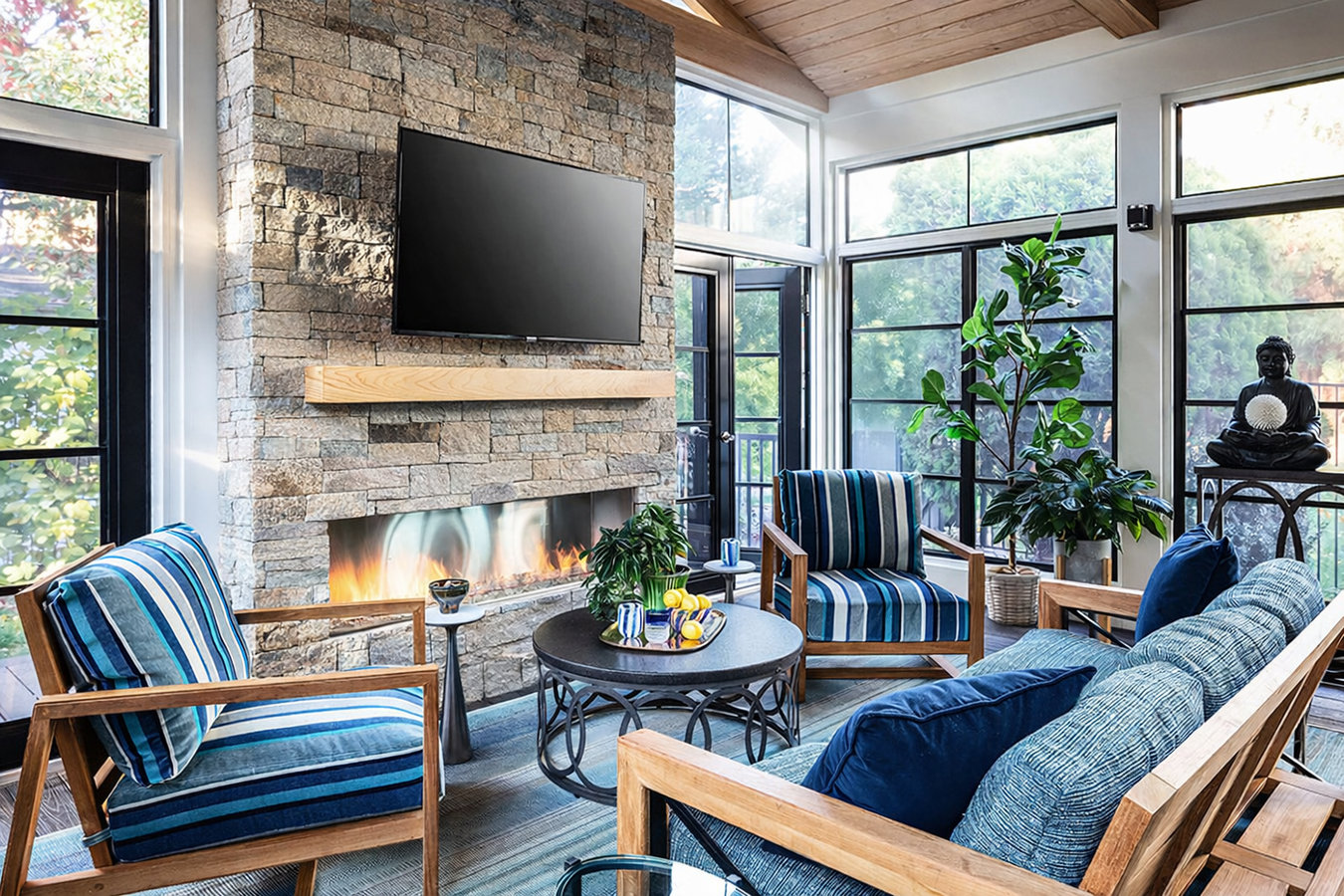
Your backyard sits empty most of the summer because of the heat. An all season room gives you a climate-controlled space you can actually use year-round, with views of your yard and none of the weather.
All season rooms in Chino Hills are fully enclosed, insulated additions built to the same standard as the rest of your home - with proper insulation, sealed double-pane windows, and a heating and cooling connection - so the space stays genuinely comfortable no matter the weather, and most projects run four to eight weeks of active construction once permits are in hand.
That is the real difference between an all season room and a basic sunroom or screened porch. A three-season room can be pleasant in mild weather, but it was not built for the 100-degree afternoons Chino Hills sees every summer or the chilly nights that come through in December and January. An all seasons room is a legitimate addition to your home's living space - not a seasonal bonus you put up with weather-related limitations.
If you are trying to decide between room types, it is worth reading about our enclosed patio rooms as well, which offer a comparable covered living space at a different price and finish level depending on your priorities.
If the heat keeps you inside for four or five months every year, you are losing a large chunk of your outdoor living space to the Chino Hills summer. Temperatures here regularly push above 95 degrees, and an unshaded patio can hit 110 degrees or more. An all season room gives you a space with views of your yard, natural light, and comfortable temperatures - without stepping into the heat.
If you have an existing covered patio or basic screened enclosure that works well in March and October but nothing else, you already know the limitation. An all season room solves that problem permanently by adding real insulation, sealed windows, and a connection to your home's HVAC. You should not have to plan your outdoor time around a narrow weather window.
If your family has outgrown your home but a full interior remodel feels too disruptive or expensive, an all season room is often a faster path to gaining a functional room. It can serve as a home office, playroom, dining space, or reading room - and because it is built as a proper permitted addition, it adds to your home's official square footage.
Chino Hills gets most of its rainfall between November and March, and modest rain can expose weaknesses in an older patio structure. If you are seeing water intrusion, rust stains, or pooling near an existing enclosure's foundation, that structure is failing. Many homeowners find it makes more financial sense to replace it with a properly built all season room than to keep patching something that is deteriorating.
Every all season room project starts with a site visit - not a phone estimate. We walk your lot before we quote, because sloped or hillside properties common throughout Chino Hills can require significantly different foundation work than flat lots. From there we handle the full build: foundation or slab prep, wall framing, insulated roof that ties into your existing roofline, double-pane low-emissivity glass panels rated for Southern California's solar heat gain, electrical, and HVAC connection or mini-split installation. We manage HOA architectural review submissions and pull all required city permits. Our enclosed patio rooms service is a related option for homeowners who want a covered outdoor living space without the full insulation and HVAC requirements of a four-season room.
If you want the room to feel like a seamless part of your home, we offer finished interior packages with flooring, drywall, trim, and paint to match your existing interior. Some homeowners also want to understand how our all season rooms compare to a standalone four season sunroom build - the two share the same insulation and climate-control standards, with some differences in roof and structural approach depending on your home's layout. Both options are built to California energy efficiency standards and fully permitted.
Suits homeowners who want a fully insulated, climate-controlled room connected to heating and cooling - comfortable in any month of the year.
Suits properties with uneven terrain where additional foundation work, retaining walls, or deeper footings are required before framing begins.
Suits homeowners in planned communities who need roofline, material, and color choices approved in writing before construction can start.
Suits homeowners who want the new room to match their existing interior with drywall, hardwood or tile flooring, and painted trim throughout.
Chino Hills sits in the Pomona Valley, and the inland location means it does not get the coastal cooling that keeps cities closer to the ocean comfortable in summer. Heat waves push well past 100 degrees, which is why the glass system in an all season room here is the most consequential material decision you will make. Low-emissivity glazing - a nearly invisible coating that reflects heat before it enters - is the difference between a room you use in July and one you avoid until fall. California also has some of the most demanding energy efficiency standards for new additions in the country, which adds some upfront cost but means a permitted room here is genuinely comfortable year-round and will not spike your energy bill.
There is also the seismic question. Chino Hills sits in an active seismic zone - the 2008 earthquake centered directly beneath the city was a reminder that this is not just theoretical. Any addition is engineered and inspected to meet current California seismic requirements, which means the connection between the new room and your home is built to hold under movement. We work regularly with homeowners across Rancho Cucamonga where similar Inland Empire heat conditions apply, and throughout Chino Hills where the combination of hillside lots, HOA requirements, and seismic standards makes working with a locally experienced contractor the right call.
We respond within one business day. We will ask a few basic questions - the approximate size you have in mind, where on your home the room would sit, and what you plan to use the space for - so the site visit is productive from the start.
We visit your property, walk your lot, measure the space, and look at your existing foundation and roofline. If your neighborhood has an HOA, we flag what the approval process will look like. You leave this meeting knowing what is possible and what it will cost - no obligation to proceed.
If HOA approval is required, that process comes first. Your contractor prepares the drawings and submittal documents for both the HOA and the city. City permit review in Chino Hills typically runs several weeks - we handle the submission so you do not need to visit any offices.
Once permits are issued, work begins with the foundation, then framing, windows, roof, insulation, and electrical. The city inspects the work at key stages. At the end, we walk you through the finished room, show you how everything operates, and hand over your permit and inspection records.
Free on-site estimate. We walk your lot before we quote - no surprises once construction begins.
(909) 479-6375Chino Hills has an unusually high proportion of sloped and hillside properties, and foundation requirements vary dramatically from one address to the next. We never give a firm price without physically visiting your site first. The number you agree to reflects your actual project - not a generic estimate that grows once work begins.
A large share of Chino Hills is governed by HOAs with architectural review committees. We have navigated those submittal packages many times in this city and know what materials, colors, and roofline configurations tend to get approved quickly. That experience means your project moves forward on schedule without last-minute redesigns.
Every addition we build is engineered to current California seismic standards - the framing, foundation connections, and roof attachment are all specified to handle the kind of ground movement this area sees. The 2008 Chino Hills earthquake is a reminder that this is a real consideration, not a checkbox. Your investment is as safe as the rest of your house.
Every all season room we build goes through the complete City of Chino Hills permit and inspection process. You can verify contractor licensing anytime through the California Contractors State License Board at cslb.ca.gov. A permitted addition shows up correctly on your home's record as legitimate, inspected square footage - an asset when you sell.
Taken together, these points mean you get a room that works in Chino Hills specifically - built for the heat, the seismic risk, the HOA process, and the hillside terrain - not a generic sunroom from a contractor who has never worked in this city before. We have been building in this area since 2016 and we stand behind every project with full permit documentation.
For more on California energy requirements for new additions, see the California Energy Commission building standards. For seismic hazard information specific to this area, the California Geological Survey publishes detailed zone maps. Contractor license verification is available through the California Contractors State License Board.
Convert an existing patio into a covered, walled living space - a practical step toward year-round outdoor living.
Learn MoreA fully insulated sunroom addition built to the same year-round comfort standard, with a sunroom-specific glazing and roof approach.
Learn MorePermit season fills up - lock in your project start date before the summer rush and have your room ready when you need it most.