
Loading...
Serving Chino Hills, CA and surrounding areas. (909) 479-6375
Menu
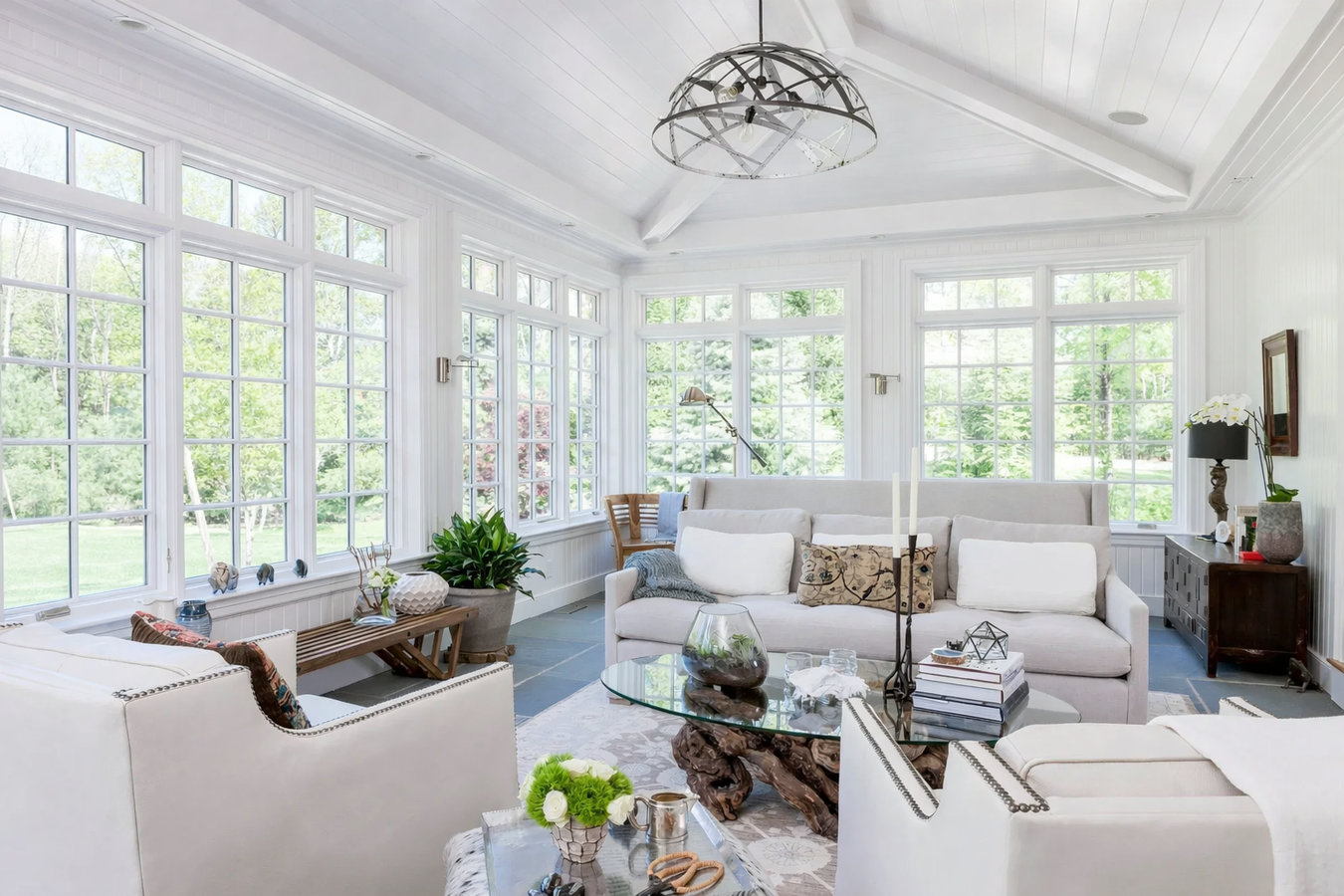
Chino Hills Sunrooms and Patios builds sunroom additions, custom sunrooms, and patio enclosures for Chino Hills homeowners. We have served the Inland Empire since 2016, handling HOA approvals and city permits on every job.
Chino Hills homes built in the 1980s and 1990s often have underused patios and backyards that sit empty from June through September. A sunroom addition turns that space into a room you can actually use year-round, with heat-blocking glass that keeps the interior comfortable even when it is 98 degrees outside.
Chino Hills summers push well past 90 degrees, and even mild winters bring cold nights. A four season sunroom with full insulation and a mini-split unit gives you a genuinely comfortable room every month of the year, not just during the pleasant stretch between October and April.
Chino Hills is a city of planned communities with active HOA architectural committees. A custom sunroom designed to match your home's existing roofline, stucco finish, and trim profile is far easier to get approved than a generic kit, and it looks like it has always been part of the house.
Many Chino Hills homes already have a covered patio that is close to becoming a real room. A patio enclosure adds walls and glazing to the existing structure, turning it into a usable living space without the full cost and permitting complexity of a ground-up addition.
If your Chino Hills home has a concrete slab patio that already has the right dimensions and drainage, converting it to a sunroom can save significant time and foundation cost compared to starting from scratch.
Chino Hills homeowners who want to keep the feel of open-air outdoor living while blocking insects, ash from wildfire season, and strong Santa Ana gusts often choose a screened room as a lower-cost alternative to a fully enclosed sunroom.
Most homes in Chino Hills were built during the suburban expansion of the 1980s and 1990s, which means they are now 30 to 40 years old and hitting the point where outdoor living upgrades are both practical and financially worthwhile. The city sits in the Puente and Chino Hills ranges, so a meaningful share of properties are built on graded hillside lots, sometimes with sloped backyards, retaining walls, and tiered landscaping. A sunroom addition on a hillside lot requires careful foundation assessment and often needs engineered footings that a contractor unfamiliar with this terrain will not price accurately upfront.
The climate here is another factor that separates a good sunroom from a mediocre one. Summer temperatures in Chino Hills regularly reach 95 to 100 degrees Fahrenheit, and the intense Inland Empire sun is present most of the year. A sunroom built without low-emissivity glass and proper ventilation will be unusable from late June through early September, which is exactly the period when most homeowners want to enjoy a new outdoor living space. Adding the HOA landscape to this, where a significant share of Chino Hills neighborhoods require architectural review approval before any exterior addition can begin, and it becomes clear why local knowledge matters more here than in most cities.
Our crew works in Chino Hills regularly, and we have been pulling permits through the City of Chino Hills Building and Safety Division since 2016. We know the city's plan check process, the typical review timelines for HOA architectural committees in Chino Hills communities, and the soil conditions that show up on hillside lots throughout the city. When a homeowner near Carbon Canyon Road calls us about a sloped backyard, we already know what that terrain typically looks like before we arrive.
The city stretches across rolling hills, with major corridors running along Grand Avenue and Peyton Drive connecting the residential neighborhoods. Many homes back up to open space near Chino Hills State Park on the western edge of the city, and the clay-heavy soils that dominate this area shift meaningfully with each wet and dry season cycle. That soil movement is one reason why careful foundation design matters so much here. Homes near Carbon Canyon Regional Park in the eastern part of the city often sit on steeper lots with more complex drainage profiles that affect sunroom foundation planning.
If you are in Chino Hills and want to know what your specific lot and HOA situation will mean for a sunroom project, a site visit is the only honest way to give you a real answer. We also serve homeowners in nearby Chino and throughout the Inland Empire, so if your needs reach across city lines, we can help with that too.
We respond to every inquiry within one business day. On the first call we ask a few basic questions about your space, your HOA situation, and what you want to use the room for, so we can give you a realistic sense of scope before anyone visits your home.
A member of our team visits your property to assess the site, check the lot slope, review the existing structure the sunroom will attach to, and confirm HOA setback requirements. You receive a written estimate within a week that reflects your actual lot, not a generic number. This is where cost questions get answered honestly.
We prepare and submit the permit application to the City of Chino Hills Building and Safety Division and, if your neighborhood requires it, the HOA architectural review submission. This phase typically takes three to eight weeks depending on city workload and HOA schedules.
Once permits are in hand, construction runs three to eight weeks depending on size and complexity. We are present for the city's final inspection, handle any punch list items, and do not consider the job done until you have walked through the finished room and signed off.
We serve Chino Hills homeowners directly and handle HOA paperwork, city permits, and on-site assessments as part of every job.
(909) 479-6375Chino Hills was incorporated as a city in 1991 and grew quickly during the Southern California suburban expansion of the 1980s and 1990s. The city is home to roughly 82,000 to 85,000 residents, almost entirely in single-family neighborhoods spread across the Puente Hills and Chino Hills ranges. The terrain gives the city its distinctive character, with streets that wind up hillsides past tiered landscaping, retaining walls, and sloped lots. Most homes are stucco-finished detached houses in the 1,500 to 3,500 square foot range, and the city consistently ranks among the highest-income cities in San Bernardino County, with median household incomes well above the regional average.
Landmarks that most Chino Hills residents recognize include Chino Hills State Park on the western edge of the city, Carbon Canyon Regional Park near the Orange County border, and The Shoppes at Chino Hills on Grand Avenue, which serves as the city's primary commercial anchor. Parts of Chino Hills are designated Very High Fire Hazard Severity Zones by CAL FIRE, which adds a layer of building code requirements that affect exterior construction projects. Neighboring Chino sits just to the west and shares many of the same climate and soil characteristics, though its flatter terrain built on former dairy land creates a different set of foundation considerations for sunroom work.
Add beautiful, light-filled living space to your home with a custom sunroom.
Learn MoreEnjoy your sunroom comfortably in every season with full climate control.
Learn MoreAffordable sunroom option ideal for spring, summer, and fall enjoyment.
Learn MoreGet a sunroom designed exactly to your specifications and style preferences.
Learn MoreExpert construction from foundation to roof for your new sunroom addition.
Learn MoreRefresh and modernize your existing sunroom with professional remodeling services.
Learn MoreKeep bugs out and enjoy fresh air year-round with a screened outdoor room.
Learn MoreConvert your existing patio into a fully enclosed, comfortable sunroom.
Learn MoreTurn your deck into a beautiful enclosed sunroom with lasting value.
Learn MoreProtect your patio from sun and rain with a durable, stylish cover.
Learn MoreOur team serves Chino Hills homeowners directly. Call today or submit the contact form and we will follow up within one business day.