
Loading...
Serving Chino Hills, CA and surrounding areas. (909) 479-6375
Menu
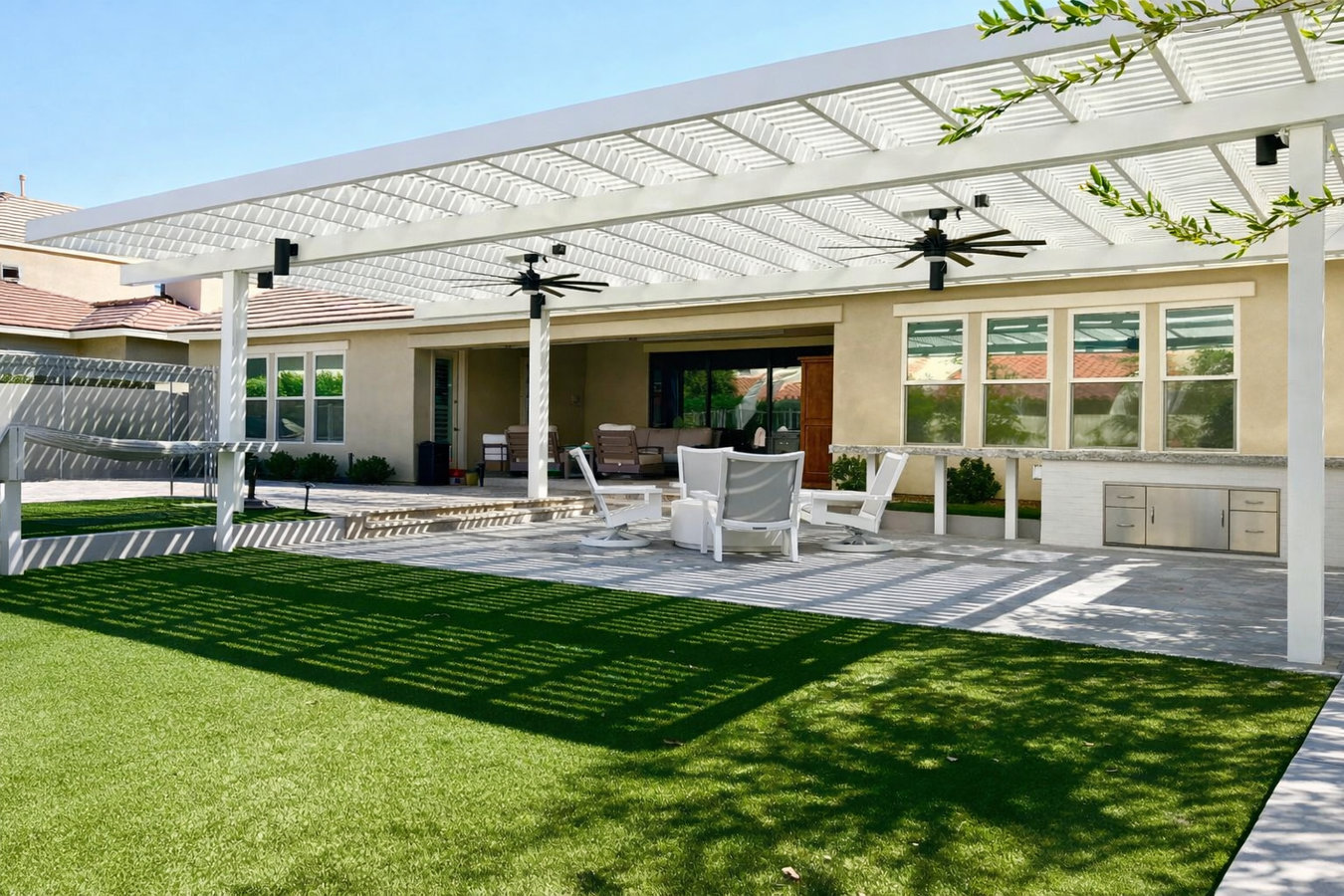
Your backyard sits empty all summer because there is nowhere to escape the sun. A properly installed patio cover gives you real shade, passes HOA review, and holds up through Santa Ana wind season.
Patio cover installation in Chino Hills means adding a permanent roof-like structure to your home that shades your outdoor space - most standard attached installations are completed in one to three days of active work, with the full project timeline running six to ten weeks once HOA and city permit approvals are included.
In Chino Hills, where summer temperatures regularly push into the high 90s and above, a solid patio cover is less of a luxury and more of a practical necessity for anyone who wants to use their backyard from spring through fall. The cover attaches to your home's structural framing - not just the stucco surface - which matters both for structural integrity through Santa Ana wind events and for passing city inspection. This is also true of sunroom design projects, where getting the attachment right from the start determines how the finished room performs for years.
Homeowners in Chino Hills often compare a patio cover to a patio enclosure when deciding how much outdoor protection they need. A cover provides shade and weather protection on top. An enclosure adds walls and windows. If you are unsure which is right for your situation, that is a straightforward question to answer in a site visit conversation.
If you avoid your own backyard from June through September because the sun makes it unbearable, a patio cover addresses that problem directly. In Chino Hills, where the inland location means temperatures can climb past 100 degrees, an uncovered patio becomes essentially wasted space for four to five months of the year. A solid cover changes that - giving you an outdoor space you can actually use through the heat.
If your cushions are brittle, your furniture looks bleached, or your concrete or tile shows UV damage, you are getting direct evidence of how intense the Inland Empire sun is. The same rays that damage your furniture are what make your patio uncomfortable to sit in. A solid patio cover blocks the direct sun load and extends the life of everything underneath it.
If your current cover droops in the middle, lets water through after rain, or has a visible gap forming where it meets your home's wall, the structure is failing. In some cases a repair is sufficient, but if the framing underneath is compromised, a full replacement is the safer and more cost-effective path. An inspector can tell you within a few minutes whether repair or replacement makes more sense.
If a past contractor submitted patio cover plans to your HOA and got turned down, that does not mean a cover is off the table. It may mean the design or materials did not meet your HOA's specific guidelines. A contractor who works regularly in Chino Hills neighborhoods knows what local associations typically approve and can help you design something that passes the first time rather than going through multiple rounds of review.
Every patio cover project starts with a site visit and a written, itemized estimate - not a phone quote. We measure your space, check your existing slab condition, look at how your home is framed, and ask about your HOA situation before putting any numbers in writing. From there we handle the full scope: HOA submission if required, city permit application, anchor hardware into your structural framing, frame and post installation, roofing panel attachment, and any electrical work for lighting or ceiling fans. We finish by scheduling and passing the city inspection so the job is officially closed out in your home's record. Homeowners interested in a more fully enclosed outdoor space can also learn about our patio enclosures service, which adds walls and windows to create a screened or glass-enclosed room.
Material selection is a conversation we have at the estimate stage - not after the contract is signed. Aluminum covers require almost no maintenance and resist fading in Chino Hills summers. Wood looks traditional but needs regular care in this climate. Vinyl is a practical middle ground that resists UV degradation without the weight of aluminum. For homeowners in HOA neighborhoods, material and color choices have to work within what the architectural review board allows - we know what those boards typically require in Chino Hills, and we factor that into our recommendations. For homeowners considering a more substantial structure, our sunroom design service covers the full range of enclosed addition options if you eventually want to take the next step.
Suits homeowners who want a low-maintenance, long-lasting option that resists fading and requires no painting or sealing over time.
Suits homeowners who want a traditional or craftsman look and are willing to invest in periodic sealing or painting to maintain it in Southern California's climate.
Suits homeowners who want a clean, low-maintenance finish that resists UV damage and is often compatible with HOA color requirements.
Suits homeowners who want to extend evening and daytime use with electrical additions - ceiling fans and recessed lighting are the most common upgrades.
Chino Hills is a planned community built largely in the 1980s and 1990s, and the combination of HOA prevalence, Inland Empire heat, and Santa Ana wind exposure creates a specific set of requirements for any patio cover project. Most of the city's neighborhoods are governed by homeowners associations with architectural review processes - getting HOA approval before applying for a city permit is the correct order of operations, and a contractor who works here regularly knows that. The city permit itself is non-optional: the City of Chino Hills Building and Safety Division requires a permit for any permanent attached structure, and an inspector verifies the anchor connection to your home's structural framing before sign-off. The Community Associations Institute is a useful resource for understanding how HOA review processes typically work if you want to know what to expect before your first conversation with a contractor.
The Santa Ana winds that hit Chino Hills each fall are a practical engineering concern, not just an inconvenience. Gusts in exposed areas can exceed 50-60 mph, and a cover that is only anchored to the stucco surface - rather than the structural framing behind it - can pull away or shift. The clay-heavy soils on many Chino Hills hillside lots also affect how post footings are designed; these soils expand when wet and contract when dry, and footings that were not designed for that movement can shift over time. We work with homeowners across Upland and throughout Chino Hills where these same wind, soil, and HOA conditions apply to every project.
We reply within one business day. For any permanent patio cover, we schedule a site visit before putting numbers in writing - we measure your space, check the existing slab, look at your home's framing, and ask about your HOA right at the start.
If your neighborhood has an HOA, we prepare and submit the architectural review package with drawings, material specs, and color samples. Once HOA approval is in hand, we apply for the city building permit. Both steps are handled on your behalf - you will know what is happening but will not have to chase paperwork.
Most standard attached patio covers take one to three days to install. The crew works in your backyard - your home's interior is not disrupted. We anchor the ledger board into your structural framing, build out the frame and posts, and attach the roofing panels with correct drainage overlap.
After the structure is built, we schedule the city inspector to verify the anchor connection and structural integrity. Once the inspection passes, we do a final walkthrough - showing you how the cover drains, pointing out any maintenance it will need, and handing you copies of the permit and any warranty paperwork.
Spring books up fast - reach out now to lock in your install date before the summer rush. We reply within one business day.
(909) 479-6375Every cover we install is anchored into your home's structural framing - not just fastened to the stucco surface. This is what makes the difference during Santa Ana wind events, and it is what the city inspector specifically checks at sign-off. A cover anchored only to stucco is a cover waiting to fail.
We have prepared and submitted HOA architectural review packages in Chino Hills neighborhoods and know what local associations require. That means fewer rejected submissions, less time waiting for resubmittal, and a faster path from approval to construction start.
Every project we complete is permitted through the City of Chino Hills Building and Safety Division and passes a formal inspection. A permitted cover is officially part of your home's record - which is what protects you when you sell, refinance, or file an insurance claim. Skipping the permit is not something we do.
Chino Hills has clay-heavy soils on many hillside lots that expand and contract with moisture changes. We design post footings with those soil conditions in mind so the cover stays level and plumb over time - rather than shifting or tilting as the soil moves through wet and dry seasons.
These four things - structural anchoring, HOA experience, permits, and soil-appropriate footings - are not optional extras on a Chino Hills patio cover project. They are what separates a cover that lasts and stays on your home's record correctly from one that causes problems down the road. You can verify any California contractor license before signing anything at the California Contractors State License Board.
When a patio cover is the starting point and a full enclosed room is the next step, sunroom design turns your outdoor shade structure into a fully designed living addition.
Learn MoreA patio enclosure adds walls and windows to your covered patio, creating an enclosed room that provides protection from wind and insects beyond what a cover alone provides.
Learn MoreSpring contractor slots fill up between March and May - reach out now and lock in your installation date before the rush.