
Loading...
Serving Chino Hills, CA and surrounding areas. (909) 479-6375
Menu
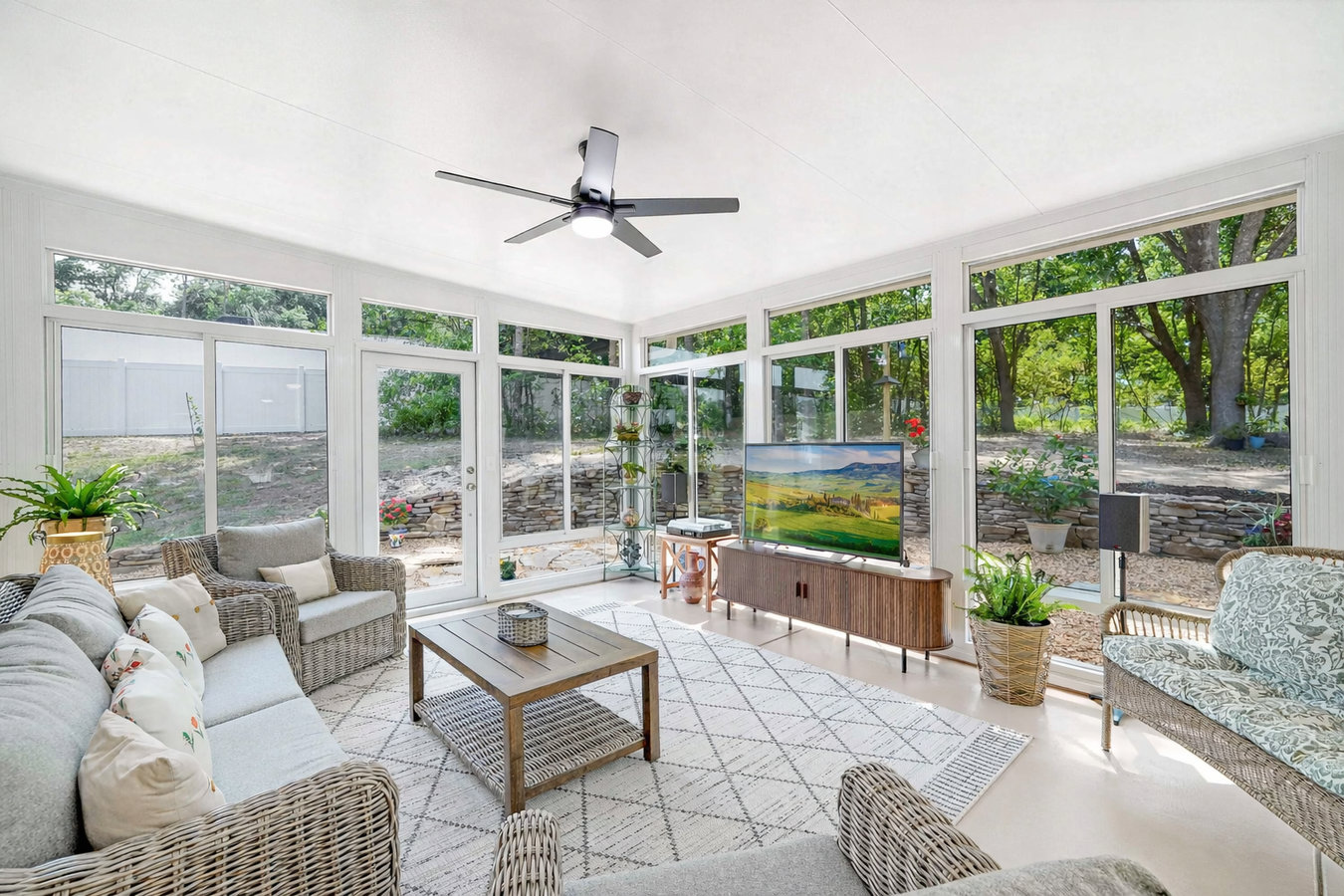
Most sunrooms in hot climates end up as expensive storage space. Good design - the right glass, the right foundation, the right connection to your home - makes the difference between a room you live in and one you avoid.
Sunroom design in Chino Hills means planning a glass-heavy enclosed room from the foundation up - glass type, roof style, how it connects to your home, and how it performs through summer heat - with most projects moving from signed contract to finished room in three to five months once HOA and permit approvals are complete.
The design decisions made before a single wall goes up determine whether your sunroom is a room you use every day or one you walk past. In Chino Hills, where summer afternoons regularly hit 95 degrees or above, glass selection alone can be the difference between a space that is comfortable in August and one that is a heat trap. Getting the foundation right matters just as much - many lots in Chino Hills sit on clay-heavy soils that shift seasonally, and a foundation designed for a flat suburban yard may not perform on a hillside lot. If you are also considering a more tailored approach, our vinyl sunrooms service covers prefabricated framing options that pair well with a strong design plan.
Homeowners who want the most flexibility in layout, materials, and room character often find that custom sunrooms is the right starting point, since the design process determines nearly every cost and comfort outcome down the line. A site visit conversation is the fastest way to understand what is possible and realistic for your specific lot.
If your outdoor space sits unused from late spring through early fall because the heat makes it unbearable, a sunroom with proper heat-blocking glass can give that space back to you. In Chino Hills, where summer heat is intense and persistent, a well-designed sunroom extends the usable square footage of your home without forcing you to choose between fresh air and comfort.
Many Chino Hills homes sit on elevated lots with views of the surrounding hills, the valley, or city lights - and most of those views are enjoyed only from the backyard or a single window. A sunroom designed to face that view turns a feature you glance at into a room you live in every day. The design phase is where the orientation and window placement decisions that capture that view are made.
If your family has outgrown your living space but a full room addition feels overwhelming in scope and cost, a sunroom is often a faster and less disruptive path to more usable space. It connects to your home, feels like part of the house, and adds real value - without the months of construction that a traditional addition requires.
If you have an older aluminum patio cover, a lattice structure, or a faded awning that is starting to rust, sag, or leak, that is a natural moment to consider whether a proper sunroom would serve you better. A sunroom replaces a temporary fix with a permanent, weather-tight room that adds value to your home rather than just shading your patio furniture.
Our sunroom design process starts with a site visit - not a phone quote. We walk your property, assess the lot conditions, check the soil, measure the available space, and ask how you plan to use the room. That conversation shapes every decision that follows: glass type, roof pitch, foundation approach, how the room connects to your home, and whether there are HOA constraints that affect the design. The two most common outcomes of this process are a vinyl sunroom for homeowners who want a lower-maintenance frame system, or a fully custom sunroom for homeowners who want more control over materials, dimensions, and finishes.
After the site visit, we produce drawings and help you submit to your HOA if required - then handle the county building permit application and manage the timeline through construction and final inspection. The design work is not a separate service you pay for and then hand off to a builder. We design what we build, so the plans reflect what is actually feasible on your lot rather than an idealized drawing from someone who has never seen your yard. Every project includes glass selection guidance, foundation design appropriate for Chino Hills soil conditions, and a schedule that accounts for HOA and permit review time.
Suits homeowners who want more outdoor-connected living space for most of the year and are comfortable closing the room off during peak summer weeks.
Suits homeowners who want a year-round room tied into their home's heating and cooling system, usable even during the hottest Chino Hills afternoons.
Suits homeowners on sloped properties where the foundation requires stepped or elevated construction - often the most dramatic view-facing designs come from this approach.
Suits homeowners in managed communities who need drawings and materials documentation prepared to the standards that local architectural review boards require.
Chino Hills is not a flat suburb. Much of the city sits on rolling hillside terrain, with homes on graded lots, sloped backyards, and varied soil conditions that include expansive clay that swells in the wet season and contracts in the dry months. A sunroom foundation designed without understanding that cycle can crack and pull away from the house within a few years. That is the kind of problem that does not show up until well after the contractor has moved on. The California Geological Survey maintains resources on expansive soil conditions across the state - a useful starting point for understanding why foundation design matters here more than in many other Southern California cities. Homeowners near Chino deal with similar soil and climate conditions, and our crews work across both cities regularly.
The summer heat in Chino Hills is a design constraint, not just a comfort preference. Temperatures regularly exceed 95 degrees, and a sunroom with the wrong glazing becomes a room no one enters from June through September. California energy code sets minimum standards for glass in new additions, but meeting the minimum is not enough in this climate - the glass specification should reflect Chino Hills conditions specifically, not the average for the state. We also serve homeowners in Diamond Bar, where similar heat and HOA dynamics apply, and experience across both communities informs how we approach the design conversation here.
The first conversation is a short phone call - we ask about your space, how you want to use the room, and your general budget range. You do not need all the answers yet. We respond to all inquiries within one business day.
We visit your property to measure the space, assess soil and slope conditions, and walk through design options in person. In Chino Hills, this visit gives us the site-specific information that determines foundation approach and glass selection - details that cannot be resolved from a phone call.
We produce drawings and submit them to your HOA first - required in most Chino Hills neighborhoods before a county permit can be pulled. HOA review typically takes two to four weeks. We handle both submissions and track both timelines.
Once permits are in hand, construction begins - foundation, framing, glass installation, and interior finish. After construction, a county inspector visits to confirm the work meets the approved plans. We schedule that inspection and stay on-site for it.
We handle the HOA submission, the county permit, and the full build - so you get a finished, inspected room without managing the process yourself.
(909) 479-6375Every glass specification we recommend accounts for the Inland Empire climate - not just California averages. A sunroom that works in San Diego may not work in Chino Hills, where summer afternoons are significantly hotter and sun exposure is more intense. We have been selecting glass for this climate long enough to know which products perform and which ones look good in a brochure.
The contractor who walks your lot is the same contractor who pulls your permits and builds your room. There is no design firm that produces drawings handed to a separate crew. That means the plans reflect what is actually buildable on your property, and the person responsible for quality is the same person who made the design decisions.
Most Chino Hills neighborhoods require HOA approval before construction begins. We prepare the submission package, handle follow-up questions from the board, and know what local associations typically require. Homeowners who have tried to navigate this process themselves often underestimate how much time it takes - we treat it as a standard part of every project.
We pull permits for every project we build. The county inspection at the end is not an obstacle - it is documentation that your room was built correctly. That documentation protects you when you sell the home and when you make an insurance claim. We have never asked a homeowner to skip the permit process, and we never will. The California Contractors State License Board at cslb.ca.gov lets you verify any contractor license in seconds.
Taken together, these proof points describe a contractor who has worked in Chino Hills long enough to know what the climate, the soil, and the HOA landscape actually require - not a contractor who brings a generic approach and figures out the local details as they go. That experience is what determines whether your sunroom is comfortable, compliant, and still performing well ten years from now.
Durable vinyl-framed sunroom systems that pair well with a solid design plan - lower maintenance and faster installation than traditional construction.
Learn MoreFully custom room additions built to your exact dimensions and finish preferences, with no prefabricated system limiting your options.
Learn MoreOur schedule fills up quickly in fall - contact us now to lock in your project before the holiday season.