
Loading...
Serving Chino Hills, CA and surrounding areas. (909) 479-6375
Menu
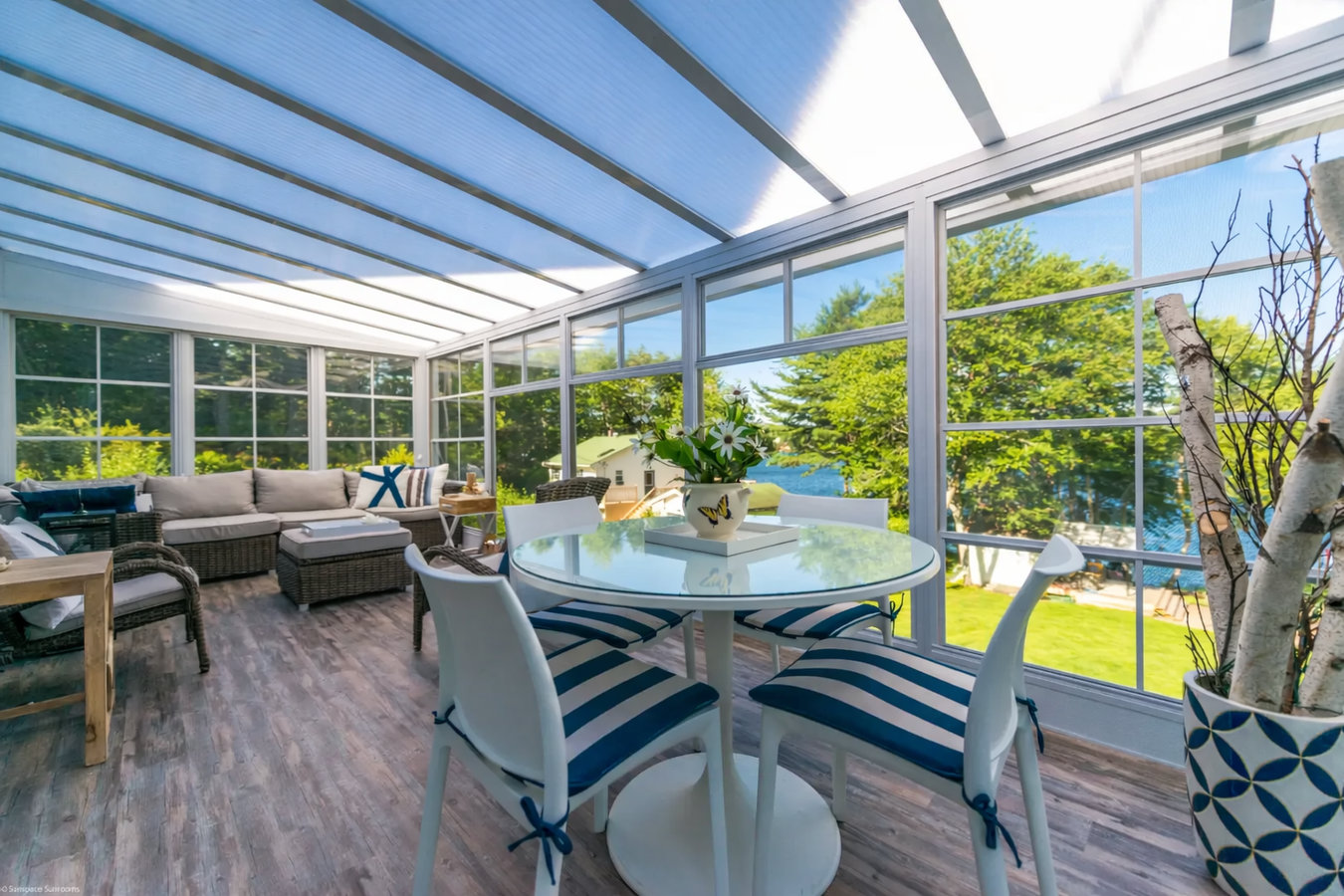
Stop watching your backyard from inside. A three season sunroom gives you shade, bug protection, and fresh air - without the cost of a full addition.
Three season sunrooms in Chino Hills are enclosed additions built for spring, summer, and fall use - framed with aluminum, fitted with large windows or screen panels, and attached to your existing home over a concrete slab - most installations take one to three weeks of construction once city permits are approved.
In a climate as mild as Chino Hills, the gap between a three season room and a four season room is smaller than it sounds. You will get comfortable use of the space from February through November, and often right through December and January as well. For many homeowners, this is more than enough - and the lower cost compared to a fully insulated build makes it an appealing option. Some homeowners also refer to this type of addition as a three season porch, which describes the same concept of a screened or glazed space designed for mild-weather use.
If you are comparing options, a patio enclosure is a related approach that works well if you already have a covered patio and want to enclose it without a full new-room build. Both options serve similar goals - the right choice depends on your existing structure and how you plan to use the space.
If your outdoor furniture sits untouched all summer because the direct sun makes it unbearable, a three season sunroom with heat-reflective glazing and ceiling fans can give you that space back. Chino Hills summers hit hard - the right room design makes the difference between a space you avoid and one you live in.
The Chino Hills area sees active mosquito and gnat seasons in the warmer months, particularly near open spaces and creek areas. A screened or enclosed three season room solves that problem completely - you get the evening breeze and the view without the bites and the retreat back inside.
If you already have a roofed patio structure but no walls or screens, you are closer to a three season sunroom than you might think. Enclosing an existing covered space often costs less than building from scratch because the roof framing is already in place. If you look at your patio and think it could be more, that is a good reason to get a quote.
A three season sunroom adds real, usable square footage - enough for a dining table, a reading chair, or a play area - without the complexity of tying into your home's HVAC system. Many Chino Hills homeowners use them as informal family rooms that spill naturally into the backyard. It is a middle path between an open patio and a conventional room addition.
We build three season sunrooms in a range of configurations to match how you actually plan to use the space. If you want to keep bugs out but still feel the breeze, a screened panel system with operable windows is the right approach. If you want protection from wind and light rain without going to a fully insulated build, a solid-panel enclosure with sections that open up gives you both. For homeowners whose existing patio has a roof but open sides, our patio enclosure service is often the most cost-effective path to an enclosed room.
If you want a room that stays comfortable in July at 2 p.m. or on a cold February evening with no compromise, our screen room installation service is worth looking at alongside the three season option - particularly if your primary goal is eliminating insects while keeping airflow maximum. We will walk through both approaches during your on-site visit so you can make a decision based on your actual property and how you plan to use the space.
Best for homeowners with an existing covered patio who want to enclose it without a full new-room build.
Ideal for homeowners whose main priority is eliminating bugs while keeping maximum airflow and an open feel.
In most of the country, "three season" means April through October. In Chino Hills, it means closer to ten months of the year. Mild winters and warm springs mean a room that is not fully insulated for a heating system still gives you comfortable daily use well into December. That changes the value calculation significantly - you are not paying for a space you lock up for four months. The bigger challenge here is summer heat management, not winter cold. Any three season sunroom we build in this area gets heat-reflective glazing and ventilation designed for Inland Empire temperatures, not for a milder coastal climate. The U.S. Department of Energy provides useful guidance on how glazing choices affect comfort in high-heat environments like ours.
Chino Hills is also an HOA-heavy city. Many planned communities here - particularly in areas like Butterfield Ranch - require architectural review approval before any exterior addition is started. We handle that submission on your behalf so the process does not stall your project. We serve homeowners across the area, including Chino Hills and Walnut.
Call or submit the form and we respond within one business day. We will ask about your space, your goals, and whether your neighborhood has HOA requirements. No hard sell, just the information we need to tell you whether this project makes sense before anyone drives out.
We measure your space, look at the existing structure, and discuss your options in plain terms. You will receive a written estimate within a week - based on your actual property, not a national average. If your lot slopes or if your slab needs attention, we flag it before you commit to anything.
We handle the HOA architectural review package and the permit application to the City of Chino Hills Building and Safety Division. Plan review typically takes four to eight weeks - we keep you updated and handle any follow-up requests from the city.
Once permits are in hand, construction runs one to three weeks. A city inspector visits after framing and at completion - that sign-off is the documentation that your room was built correctly. We walk you through the finished space before we leave.
No obligation. We visit your property, walk through your options, and give you a written estimate - so you can decide with real numbers, not ballpark guesses.
(909) 479-6375We build sunrooms specifically in the Inland Empire, where summer temperatures demand heat-reflective glazing as a baseline, not an upgrade. Contractors from cooler climates may not spec the right glass for a Chino Hills July. We do, because this is where we work.
A large share of Chino Hills homes are in HOA communities with architectural review requirements. We prepare your submission package - drawings, material specs, and color details - so your HOA gets what it needs the first time. A rejected submission adds weeks to your timeline; we work to prevent that. The California Contractors State License Board verifies contractor licensing at cslb.ca.gov.
Many Chino Hills properties are built on graded hillside lots where a flat-lot foundation plan simply does not work. We assess your site before quoting, so your written proposal reflects the actual foundation requirements for your specific property - not a number that grows once digging starts.
Every project we build goes through the City of Chino Hills Building and Safety Division permit and inspection process. You receive the signed permit paperwork when the job is complete - the documentation that protects your investment and keeps your home sale-ready whenever that time comes.
Every project we take on in Chino Hills is permitted, inspected, and built for this climate. That combination - local knowledge, full compliance, and site-specific design - is what makes the difference between a room you are proud of and one you regret.
Turn your existing covered patio into a protected room - often the fastest path to enclosed outdoor living.
Learn MoreMaximum airflow and bug protection with a lightweight screened structure that keeps the outdoor feel.
Learn MorePermit timelines in Chino Hills mean the sooner you reach out, the sooner you are sitting in your new room - contact us today and we will get the process moving.